
Restaurant Pest Control in Ottawa: Compliance Guide
- Ahkim Camara
- 12 août
- 9 min de lecture

Table of Contents
Why Pest Control Matters in Ottawa Restaurants
Ottawa Public Health Food Safety Regulations for Pest Management
Common Pests Threatening Ottawa Food Service Establishments Rodents and Their Health Risks Cockroaches and Food Contamination Insects and Structural Damage
Rodents and Their Health Risks
Cockroaches and Food Contamination
Insects and Structural Damage
Restaurant Pest Control Logbook Requirements and Documentation
Pest Control Service Frequency for Ottawa Restaurants
Integrated Pest Management Strategies for Food Service Kitchens Preventative Measures and Pest Exclusion Sanitation Standards and Hazard Analysis
Preventative Measures and Pest Exclusion
Sanitation Standards and Hazard Analysis
Pest-Proofing Your Restaurant: Design and Maintenance Checklist
Liability and Insurance Implications of Pest Infestations
Last Updated: August 10, 2026
Why Pest Control Matters in Ottawa Restaurants
A single rodent or cockroach sighting can trigger health department investigations, customer complaints, and reputational damage that takes months to recover from. Ottawa's competitive restaurant landscape means your establishment operates under constant scrutiny from both regulators and diners who share experiences online instantly.
The stakes are high in Ottawa, where Ottawa Public Health maintains strict food safety oversight and inspection reports are increasingly accessible to the public. A documented pest infestation can result in temporary closure orders, fines, or loss of operating licenses. Word spreads quickly through social media and review platforms when patrons encounter evidence of rodents or insects.
At Dobelo Extermination, we've worked with Ottawa restaurants facing everything from active infestations to preventative maintenance needs. The difference between establishments that maintain pest-free environments and those that struggle comes down to treating pest control as an integrated, ongoing system rather than a reactive emergency response.
Ottawa Public Health Food Safety Regulations for Pest Management
The Health Protection and Promotion Act (HPPA) governs food safety in Ontario, and Ottawa Public Health applies these standards through inspections and enforcement. Restaurants must maintain sanitary conditions that prevent pest infestations and respond immediately to any evidence of pest activity.
Food safety regulations require that restaurants establish and document their pest management approach. Your establishment must demonstrate a system in place to prevent, detect, and respond to pest issues. Health inspectors will ask to see your pest control logbook, records of professional treatments, and evidence of preventative maintenance.
Regulations also specify that food storage areas, preparation surfaces, and equipment must prevent pest access through proper sealing of gaps, regular cleaning protocols, and secure storage of ingredients. Failure to meet these standards results in health code violations that can escalate from warnings to fines to closure orders.
Key Takeaway Ottawa Public Health requires documented pest management systems, regular inspections, and immediate response to pest activity. Non-compliance can result in fines, temporary closure, or loss of operating license.
Common Pests Threatening Ottawa Food Service Establishments
Rodents and Their Health Risks
Rodents represent the most serious pest threat to Ottawa restaurants. Mice and rats contaminate food preparation surfaces, equipment, and stored ingredients with urine, feces, and saliva, carrying pathogens including Salmonella, E. coli, and Hantavirus. A single pair of mice can produce 50-60 offspring in a year, meaning rodent infestations often go undetected until populations are already established.

Signs of rodent activity include droppings (typically 3-8mm, dark, and rice-shaped), gnaw marks on packaging or structural elements, and greasy rub marks along walls where rodents travel. Restaurants in Ottawa's downtown core and older buildings face higher rodent pressure due to proximity to other infested buildings and aging infrastructure that provides entry points.
Cockroaches and Food Contamination
Cockroaches thrive in warm, humid kitchen environments and contaminate food and food contact surfaces with bacteria picked up from sewers and drains. Cockroach allergens also trigger asthma and allergic reactions in some individuals. A single cockroach sighting during a health inspection triggers immediate concern and often leads to mandatory professional treatment before the restaurant can continue operating.
Insects and Structural Damage
Fruit flies and drain flies breed in organic matter and fermented materials, contaminating food preparation areas. Pantry moths infest dry goods storage, ruining inventory and spreading to other food storage areas. While these insects may seem less serious than rodents, they represent visible evidence of sanitation failures during health inspections.
Restaurant Pest Control Logbook Requirements and Documentation
Ottawa Public Health expects restaurants to maintain detailed records of pest control activities. Each entry should include the date of service, the type of pest activity observed, areas treated, products or methods used, and the name of the technician or staff member performing the work. If you hire a professional pest control service, their detailed reports become part of your logbook.
Documentation protects you legally. If a customer becomes ill and claims food contamination from pests, your logbook demonstrates that you maintained an active pest management program. Without documentation, you have no evidence that you took reasonable precautions.
Professional pest control services like Dobelo Extermination provide detailed intervention reports that meet regulatory requirements, documenting pest activity levels, treatment methods, and recommendations for ongoing prevention. Maintaining these records in an organized, accessible format ensures you can quickly show inspectors that your pest management system is functioning.
Watch Out Failure to maintain pest control documentation is a health code violation in itself. Inspectors will cite restaurants for missing logbooks even if no pest activity is evident. Keep detailed records of all pest management activities, whether performed in-house or by professionals.
Pest Control Service Frequency for Ottawa Restaurants
The frequency of professional pest control services depends on the type of establishment, size, food storage practices, and history of pest activity. Many Ottawa restaurants benefit from monthly professional inspections and treatments as a baseline. For restaurants with previous pest issues or higher-risk locations, bi-weekly or weekly monitoring may be necessary. Ottawa's winter months can drive rodents indoors seeking warmth, increasing pressure during November through March.
Professional pest control services establish a preventative monitoring system that catches problems early. During each visit, technicians inspect potential entry points, check monitoring devices, and treat any areas showing activity. This proactive approach costs less than dealing with a full-scale infestation and keeps your restaurant compliant with health regulations.
Integrated Pest Management Strategies for Food Service Kitchens
Preventative Measures and Pest Exclusion
Integrated Pest Management (IPM) combines multiple strategies: exclusion, sanitation, monitoring, and targeted treatment only when necessary. For restaurants, IPM is the most effective long-term approach because it addresses the root causes of pest problems rather than just treating symptoms.
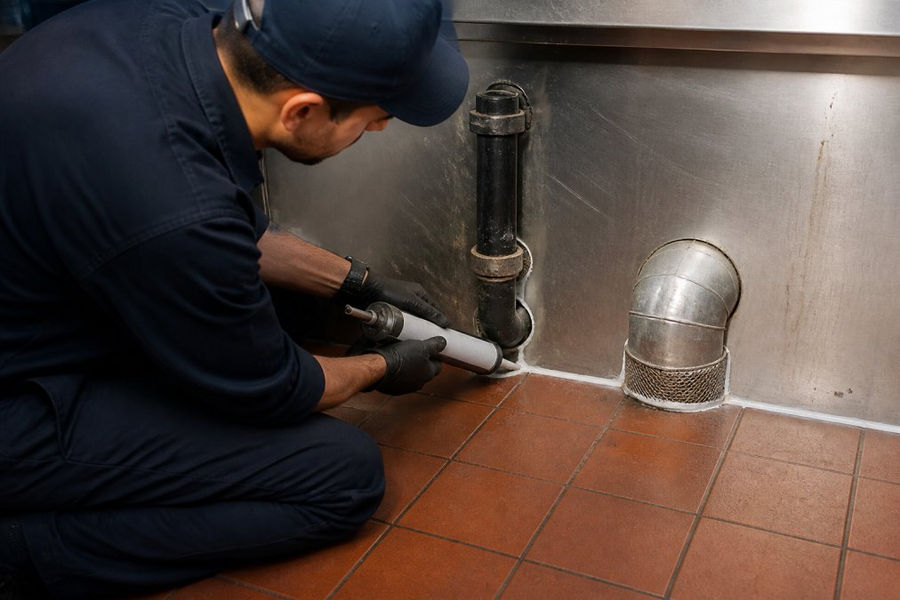
Pest exclusion means preventing pests from entering your facility in the first place. This includes sealing gaps around pipes, vents, and utility penetrations. Gaps as small as 3mm allow mice to enter. Door seals and air curtains prevent pests from entering when doors open for deliveries or customer traffic. Loading dock areas require particular attention because they're frequent entry points for pests traveling in on delivery trucks.
Proper food storage practices support exclusion efforts. Dry goods should be stored in sealed containers rather than original packaging. Elevated shelving keeps food away from floor-level pest activity. Regular inventory rotation ensures older products don't sit in storage long enough to attract insects.
Sanitation Standards and Hazard Analysis
Sanitation is the second pillar of IPM. Pests are attracted to food residues, grease buildup, and organic matter in drains and hidden areas. Daily cleaning protocols should target areas where pests hide and breed: behind and under equipment, inside hood systems, in floor drains, and in storage areas. Grease traps require regular cleaning because they attract rodents and flies.
Hazard analysis involves identifying areas where pest activity is most likely. For most restaurants, this includes loading docks, storage areas, kitchen perimeter spaces, and drain systems. Once you've identified these critical control points, you can focus cleaning and monitoring efforts where they matter most.
Pro Tip Focus your sanitation efforts on the areas where pests actually hide and breed: behind equipment, in floor drains, under shelving, and around loading docks. These critical control points require more frequent attention than general dining areas.
Pest-Proofing Your Restaurant: Design and Maintenance Checklist
Building pest-resistant infrastructure requires attention to detail during both initial design and ongoing maintenance.
Element | Action | Frequency |
Exterior gaps | Seal around pipes, vents, utility lines with caulk or steel wool | Quarterly inspection |
Door seals | Inspect and replace weatherstripping on exterior doors | Monthly |
Loading dock | Install self-closing doors and maintain tight seals | Weekly visual check |
Drain systems | Clean floor drains and maintain proper grading | Weekly |
Equipment spacing | Maintain 15cm clearance between equipment and walls | During cleaning |
Storage shelving | Use elevated shelving, inspect for damage | Weekly |
Grease traps | Professional cleaning and maintenance | Per municipal schedule |
Ventilation | Inspect hood filters and exhaust screens | Monthly |
Exterior maintenance prevents pests from establishing populations near your building. Trim vegetation away from walls, eliminate standing water, and remove debris piles where rodents nest. Interior design should facilitate cleaning and pest detection. Equipment should be elevated on legs rather than sitting directly on the floor. Coved flooring eliminates hiding spaces and makes cleaning easier.
Regular maintenance prevents small problems from becoming infestations. A crack in exterior caulking that goes unrepaired for months becomes an entry point for rodents. Monthly inspection walks identify these maintenance issues before they become pest problems.
Liability and Insurance Implications of Pest Infestations
Restaurant owners often underestimate the legal and financial consequences of pest infestations. Beyond health department fines, pest-related incidents create liability exposure that affects insurance coverage and customer lawsuits.
If a customer becomes ill and claims the illness resulted from food contaminated by pests, they may pursue legal action against your restaurant. Your business liability insurance may cover some costs, but insurers increasingly scrutinize pest management practices. A restaurant that can demonstrate active, documented pest prevention is in a much stronger position than one with no preventative system.
Insurance claims related to pest damage or contamination may be denied if the insurer determines you failed to maintain reasonable pest prevention measures. Your pest control logbook and professional service records demonstrate that you took reasonable precautions. Without documentation, insurers may deny claims, leaving you to cover losses directly.
Key Takeaway Documented pest management systems protect your business legally and financially. Insurance companies expect evidence of active prevention, and health inspectors require documented compliance. Without records, you face liability exposure and potential claim denials.
Pest infestations in Ottawa restaurants are preventable through systematic, documented approaches to pest management. The restaurants that maintain pest-free environments implement integrated pest management strategies, maintain detailed documentation, and work with certified professionals who understand Ottawa's regulatory requirements.
Dobelo Extermination serves Ottawa restaurants with certified pest management services designed to meet health department standards while protecting your business reputation and customer safety. Our 24/7 availability means you can respond immediately to pest concerns, and our detailed intervention reports provide the documentation Ottawa Public Health expects. Get a free assessment of your restaurant's pest control needs and learn how professional management protects your business from infestations and regulatory violations.
Frequently Asked Questions
What are the Ottawa Public Health requirements for restaurant pest control?
Ottawa Public Health requires food service establishments to maintain pest-free environments through regular inspections, documented pest control services, and preventative sanitation. Restaurants must comply with Health Protection and Promotion Act (HPPA) standards and maintain detailed records of all pest management activities. Professional pest control services must be performed by certified exterminators, with reports filed to demonstrate regulatory compliance. Health inspectors verify pest control measures during routine and complaint-based inspections.
How often should a restaurant in Ottawa have professional pest inspections?
Professional pest inspections frequency depends on your restaurant's risk level and pest history. High-risk establishments typically require monthly inspections, while lower-risk operations may need quarterly visits. Ottawa Public Health expects documented pest control service frequency for restaurants to align with your facility's specific vulnerabilities. A certified exterminator will assess your kitchen layout, storage areas, and past issues to recommend an appropriate schedule. Regular monitoring through integrated pest management strategies helps catch infestations before they become compliance violations.
What documentation is required for pest control in Ontario food services?
Ontario food service establishments must maintain a restaurant pest control logbook requirements including dates of inspections, services performed, pests detected, treatments applied, and follow-up actions. Records must identify the certified exterminator or pest control company, specific areas treated, and any recommendations for preventative measures. These logs must be available for Ottawa Public Health inspectors and retained for a minimum period set by municipal regulations. Detailed intervention reports demonstrate your commitment to regulatory compliance and provide evidence of corrective actions taken.
What happens if my restaurant fails a pest control inspection?
A failed pest control inspection can result in health code violations, mandatory corrective orders, and potential closure orders if the infestation poses an immediate public health risk. Ottawa Public Health may require emergency pest control services at your expense and increased inspection frequency. Violations are documented and can affect your health inspection rating, damaging your reputation and customer trust. Repeat violations may result in fines or loss of operating license. Immediate action with a certified exterminator is essential to restore compliance and prevent escalating penalties.
Can pest control services be performed discreetly during restaurant operating hours?
Yes, professional pest control for restaurants can be scheduled to minimize disruption. Many certified exterminators offer early morning, late evening, or scheduled off-hours treatments. Preventative maintenance and monitoring can often be completed without affecting customer service. However, active infestations may require more intensive treatments that necessitate temporary closure of affected areas. Dobelo Extermination provides flexible scheduling options and works with restaurant operators to maintain business continuity while ensuring thorough pest management and regulatory compliance.
What are the liability risks if my restaurant has a pest infestation?
Pest infestations expose restaurants to significant liability, including foodborne illness claims, customer illness lawsuits, and regulatory penalties from Ottawa Public Health. Documented infestations can trigger health code violations, fines, and mandatory closure orders. Your business liability insurance may not cover losses from preventable pest issues, and customers may pursue legal action for illness or injury. Reputational damage from pest infestations can be devastating. Proactive pest control services, documented compliance efforts, and certified exterminator partnerships demonstrate due diligence and reduce your legal exposure.
How does integrated pest management differ from standard pest control treatments?
Integrated Pest Management (IPM) combines preventative measures, monitoring, and targeted treatments rather than relying solely on chemical applications. IPM includes pest exclusion, sanitation improvements, regular inspections, and hazard analysis to address root causes of infestations. This approach reduces chemical use, minimizes food contamination risks, and provides long-term pest prevention. For Ottawa restaurants, IPM aligns with food safety regulations and critical control points required by Health Protection and Promotion Act standards. IPM strategies are more effective than reactive treatments alone and demonstrate proactive compliance to health inspectors.
Estimation gratuite
This article was written using GrandRanker


Commentaires