
How to Identify a Termite Infestation: 7 Key Signs
- Ahkim Camara
- 16 août
- 8 min de lecture

Table of Contents
Visual Signs of a Termite Infestation Hollow-sounding wood and structural damage Mud tubes and earth galleries Discarded wings and swarmers
Hollow-sounding wood and structural damage
Mud tubes and earth galleries
Discarded wings and swarmers
Step-by-Step DIY Inspection Process Inspecting interior areas Checking exterior zones and foundations
Inspecting interior areas
Checking exterior zones and foundations
Difference Between Termites and Carpenter Ants
Professional Termite Inspection Services
How to Prevent Termite Infestations
What to Do If You Suspect an Infestation
Conclusion
Last Updated: August 17, 2026
Visual Signs of a Termite Infestation
The most reliable way to identify termite infestation is to look for physical evidence of damage and termite activity. Termites leave visible traces that help determine whether you're dealing with an active infestation.
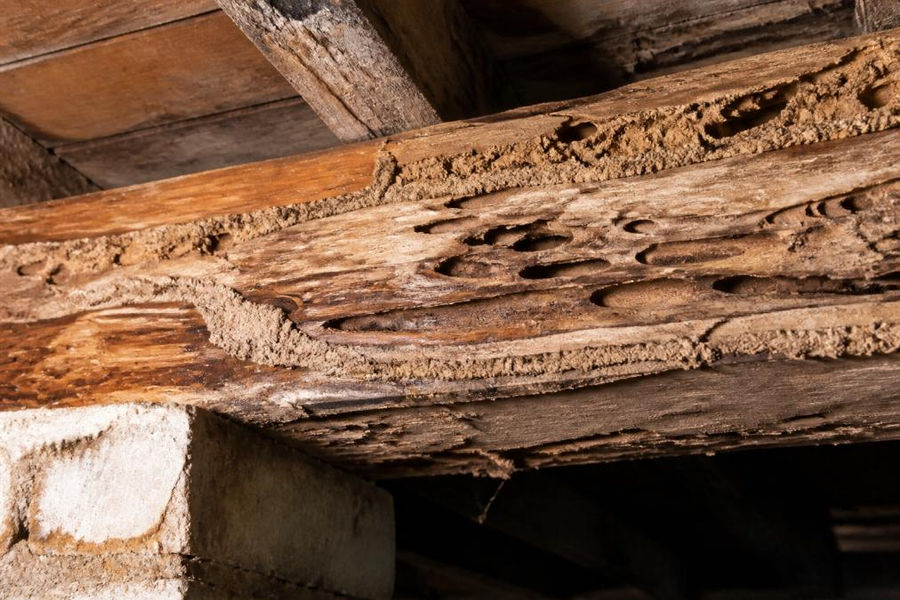
Hollow-sounding wood and structural damage
When you tap on wood damaged by termites, it produces a hollow, papery sound rather than the solid thud of healthy wood. Termites consume the interior while often leaving the outer shell intact, creating galleries that progressively weaken the structure.
Run your fingers or a small tool along wooden surfaces in basements, crawl spaces, and around door frames. If the wood feels soft, crumbles easily, or shows signs of buckling or warping, termite damage may be present. Pay particular attention to areas where wood contacts soil or where moisture accumulates.
Structural damage from termites can include sagging floors or ceilings, doors and windows that no longer close properly, visible cracks in wooden beams, and wood that appears blistered or darkened. The longer an infestation goes undetected, the more extensive the damage becomes.
Mud tubes and earth galleries
Subterranean termites build mud tubes to travel between their underground nests and above-ground food sources. These tubes are typically about the width of a pencil and made from soil, saliva, and fecal matter.
Look for mud tubes along foundation walls, basement columns, and anywhere wood touches the ground. They often follow cracks in concrete or run along pipes and utilities. If you find a mud tube, break it open carefully. If you see termites inside or if the tube is rebuilt within a few days, you have an active infestation.
Earth galleries are tunnels termites create within soil around your foundation or in garden beds. Their presence indicates termites are actively foraging in that area.
Pro Tip If you find mud tubes, photograph them before breaking them open. This documentation helps professional inspectors confirm the type of termite and assess the extent of the infestation.
Discarded wings and swarmers
During spring and early summer, termites send out swarmers (alate reproducteurs) to establish new colonies. These winged termites have straight antennae, equal-length wings, and a thicker waist than flying ants. After mating, they shed their wings.
Finding piles of discarded wings on windowsills, near light fixtures, or on the ground outside indicates swarming activity. The presence of wings suggests termites have recently established a new colony nearby. Swarmers are attracted to light, which is why you often find them near windows and exterior lights. If you notice termites flying around your home during warm months, contact a pest control professional immediately.
Step-by-Step DIY Inspection Process
A thorough inspection can reveal whether termites are present and where they're most active. While professional inspectors have specialized equipment, homeowners can perform a basic inspection to identify obvious signs. This process takes 1-2 hours depending on your home's size.

Inspecting interior areas
Step 1: Check the basement and crawl spaces [Time: 20-30 minutes]
Start in the lowest level of your home where wood is most likely to contact soil or moisture. Bring a flashlight, a small screwdriver or probe, and a notebook. Look for mud tubes on foundation walls, columns, and rim joists; soft or hollow-sounding wood; visible damage or galleries in exposed beams; and signs of moisture. Press the screwdriver gently into wooden surfaces, if it penetrates easily, the wood may be compromised.
Step 2: Inspect wall cavities and interior framing [Time: 15-20 minutes]
Open access panels or remove outlet covers in basement areas to peer into wall cavities. Check the rim joist (the band of wood around your foundation perimeter), a common entry point for subterranean termites. If you see mud tubes here, there's likely an active infestation.
Step 3: Examine wood around pipes and utilities [Time: 10-15 minutes]
Termites often use pipes, electrical conduits, and other utilities as pathways into the home. Inspect where these utilities pass through walls and foundations for mud tubes or damage.
Watch Out Never disturb mud tubes with bare hands. Use a probe or screwdriver to investigate.
Checking exterior zones and foundations
Step 4: Inspect the exterior foundation and grade [Time: 20-25 minutes]
Walk around the entire exterior perimeter. Look for mud tubes on the foundation, termite galleries in soil near the foundation, damaged wood in siding or trim, and areas where soil contacts wood directly. Check for wood debris, old stumps, or wooden landscape materials touching the foundation.
Step 5: Examine wooden structures and stored materials [Time: 15-20 minutes]
Inspect any wooden decks, sheds, fences, or stored lumber on your property. Termites often infest these structures first. Pay special attention to areas where wood contacts soil or where moisture accumulates.
Step 6: Document and assess [Time: 10-15 minutes]
Compile your findings into a written record noting locations of mud tubes or damage, extent of visible damage, areas of moisture, and photos of each finding. This documentation is valuable if you contact a professional inspector.
Key Takeaway If you find clear signs of termite activity, mud tubes, hollow wood, or discarded wings, contact a professional immediately. Early intervention prevents costly structural damage.
Difference Between Termites and Carpenter Ants
Homeowners often confuse termites with carpenter ants, another wood-damaging pest. While both create similar-appearing damage, they behave differently and require different treatment approaches.
Termites consume wood as a food source, work in colonies often underground, and create mud tubes for protection. Their damage typically appears as galleries inside the wood with minimal external signs until damage is extensive.
Carpenter ants hollow out wood for nesting but don't eat it. They're often seen moving in trails, especially at night, and produce sawdust-like frass that accumulates near galleries.
Feature | Termites | Carpenter Ants |
Food source | Eat wood (xylophage) | Hollow wood for nesting only |
Mud tubes | Create protective mud tubes | No mud tubes |
Visible damage | Internal galleries, minimal external signs | Smooth, clean galleries with sawdust |
Colony location | Usually underground or in wood | Typically in wood, sometimes in soil |
Activity pattern | Work inside wood continuously | Visible at night, foraging trails |
Swarmers | Winged reproducteurs in spring/summer | Rare; usually just workers |
Frass | Pellet-like, often inside galleries | Coarse sawdust outside galleries |
If you find carpenter ants, treatment differs from termite control. Carpenter ants can be managed by eliminating moisture and removing infested wood. Termites require more aggressive intervention because they actively consume structural wood. When in doubt, contact a professional who can identify the pest and recommend appropriate treatment.
Professional Termite Inspection Services
While DIY inspection can identify obvious signs, a professional termite inspection provides comprehensive assessment that homeowners typically cannot achieve alone. Certified inspectors use specialized equipment, knowledge of termite behavior, and experience to detect infestations in hidden areas.
Professional inspectors typically use moisture meters to identify active areas, examine crawl spaces and attics thoroughly, check for signs of past treatments, assess structural integrity, identify conditions encouraging termite activity, and provide detailed written reports with recommendations.
A professional inspection is especially important if you're buying or selling a home, have found signs of infestation, have had previous termite problems, your home is in a high-risk area, or you want a baseline assessment to monitor for future problems. Dobelo Extermination provides certified termite inspections with transparent reporting and clear recommendations.
How to Prevent Termite Infestations
Prevention is far more cost-effective than dealing with an active infestation. Several practical steps reduce the likelihood that termites will colonize your property.
Eliminate moisture and standing water: Fix leaking gutters, downspouts, and pipes. Ensure water drains away from the foundation and soil slopes away from the house.
Remove wood-to-soil contact: Never allow wood siding, deck posts, or wooden structures to touch soil directly. Leave adequate clearance between wood and soil.
Clear debris and wood piles: Remove dead trees, stumps, and fallen branches. Store firewood away from the house and off the ground.
Seal cracks and gaps: Caulk cracks in the foundation and gaps where utilities enter the home. Termites can fit through surprisingly small openings.
Maintain proper ventilation: Ensure crawl spaces have adequate ventilation to reduce moisture. Moisture control is one of the most effective preventive measures.
Consider preventive treatment: In high-risk areas or for older homes, preventive termite treatment creates a chemical or physical barrier around the foundation. A pest control professional can assess whether this is appropriate for your situation.
What to Do If You Suspect an Infestation
Finding signs of termite activity requires prompt action. Here's what to do:
1. Document everything: Take photos and notes of what you've found, including location, date, and damage details. This information is valuable for professional inspectors.
2. Avoid disturbing the infestation: Don't treat the area yourself or seal mud tubes. Disturbing the infestation can cause termites to relocate to other parts of your home.
3. Contact a professional immediately: Call a certified pest control service as soon as possible. Early intervention prevents extensive damage. Dobelo Extermination offers rapid response and can often schedule inspections within 24-48 hours.
4. Prepare for inspection: Show the inspector your documentation and areas of concern. Provide access to basements, crawl spaces, and attics.
5. Follow professional recommendations: After inspection, the pest control professional will recommend treatment options. This may include soil treatment, wood treatment, baiting systems, or a combination of approaches.
6. Schedule follow-up inspections: After treatment, regular inspections help ensure the infestation is eliminated and prevent recurrence.
Watch Out Don't delay seeking professional help. The cost of treating an infestation early is far lower than the cost of repairing extensive structural damage.
Identifying a termite infestation early is key to protecting your home's structural integrity and avoiding costly repairs. Hollow wood, mud tubes, discarded wings, and galleries are your early warning system. A combination of DIY inspection and professional assessment gives you the clearest picture of whether termites are active in your home. If you discover signs of infestation, contact Dobelo Extermination for a comprehensive inspection and rapid treatment. Our certified team provides guaranteed results and ensures your home remains protected from future infestations.
Frequently Asked Questions
What are the primary signs of a termite infestation in a home?
The most common signs include hollow-sounding wood when tapped, visible mud tubes along foundations and walls, discarded wings near windows or doors, and clicking sounds inside walls. You may also notice wood that appears blistered or warped, small pinholes in wood surfaces, or fecal pellets resembling sawdust. Subterranean termites create earth galleries and mud tubes to travel safely, while drywood termites leave behind piles of fecal matter. Early detection is critical because termites can cause significant structural damage over time.
How can I distinguish between termite damage and water damage?
Termite damage appears as clean, smooth galleries running along wood grain with minimal debris, while water damage causes wood to soften, swell, and crack irregularly. Termites leave behind thin mud linings in their tunnels and may deposit fecal pellets, whereas water damage produces stains and mold growth. Termite-damaged wood often sounds hollow when struck, while water-damaged wood feels spongy. If you notice mud tubes, discarded wings, or organized tunnel patterns, termites are the likely cause. When in doubt, a professional inspection can definitively identify the source of wood damage.
Where do termites typically hide within a residential structure?
Subterranean termites prefer areas near soil contact, such as foundations, basement walls, crawl spaces, and wooden support posts. They also nest in wooden sills, floor joists, and framing hidden behind walls. Drywood termites infest attics, roof timbers, wall cavities, and wooden furniture. Both species are attracted to areas with moisture or humidity. Termites avoid light and open spaces, so they tunnel inside wood or travel through mud tubes. Exterior wood like decks, fences, and tree stumps near the house are also common entry points. Regular inspection of these hidden zones is essential for early detection.
What should I do if I suspect a termite infestation?
Stop using pesticides or treatments on your own, as this can scatter the colony and make professional detection harder. Document what you've observed with photos and notes about location and timing. Avoid disturbing suspected areas. Contact a certified pest control professional immediately for a thorough inspection and diagnosis. Professional inspectors use specialized tools and knowledge to identify the termite species, assess the extent of damage, and recommend appropriate treatment. Do not delay, as termites cause progressive structural damage that becomes costlier the longer it remains untreated. Request a free estimate to understand your options.
Estimation gratuite
This article was written using GrandRanker



Commentaires