
Discreet Restaurant Pest Control in Ottawa: 2026 Guide
- Ahkim Camara
- 12 août
- 10 min de lecture

Table of Contents
Why Restaurant Pest Control in Ottawa Demands a Different Approach Common Pests Found in Ottawa Restaurants The Real Cost of a Pest Infestation for Your Business
Common Pests Found in Ottawa Restaurants
The Real Cost of a Pest Infestation for Your Business
Ottawa Public Health Restaurant Regulations You Must Know Health Inspection Checklist: Pest Control Requirements Post-Treatment Documentation for Compliance Audits
Health Inspection Checklist: Pest Control Requirements
Post-Treatment Documentation for Compliance Audits
Integrated Pest Management for Food Services: How It Works Step-by-Step: The Commercial Extermination Process Eco-Friendly and Non-Toxic Treatment Options
Step-by-Step: The Commercial Extermination Process
Eco-Friendly and Non-Toxic Treatment Options
Discreet Service Protocols: Protecting Your Restaurant's Reputation
Restaurant Pest Prevention Tips That Actually Hold Up Seasonal Pest Prevention Calendar for Ottawa Restaurants Commercial Kitchen Sanitation and Structural Sealing
Seasonal Pest Prevention Calendar for Ottawa Restaurants
Commercial Kitchen Sanitation and Structural Sealing
Emergency Pest Removal and Customized Programs for Ottawa Food Services
Conclusion
Last Updated: August 6, 2026
Why Restaurant Pest Control in Ottawa Demands a Different Approach
Restaurant pest control is fundamentally different from standard commercial service. A single pest sighting can trigger a health inspection, generate damaging online reviews, or result in closure from Ottawa Public Health. The Dobelo Extermination team has worked with food service businesses across Ottawa and Gatineau long enough to know that restaurant owners need a partner who understands compliance, discretion, and speed.
This guide focuses on what actually protects your business: prevention protocols, regulatory compliance, discreet service execution, and documentation that holds up under health audit.
Common Pests Found in Ottawa Restaurants
Ottawa's climate creates predictable seasonal pest pressure for food service businesses.
Rodents (mice and rats) are the most serious threat. They contaminate food surfaces, gnaw through packaging, and leave droppings that trigger health violations. Entry points are typically gaps around plumbing, utility lines, and loading dock doors.
Cockroaches thrive in warm, humid conditions behind commercial cooking equipment. German cockroaches are the most common species in Ottawa restaurant kitchens. They reproduce rapidly and are difficult to eliminate without a structured treatment program.
Flies (common houseflies, fruit flies, and drain flies) breed in floor drains and decomposing organic matter. Drain flies indicate a sanitation issue requiring both treatment and source elimination.
Each pest carries food safety risks beyond the visible. Cockroach allergens, rodent urine, and fly-transmitted pathogens represent genuine public health hazards, which is why Ottawa Public Health treats pest evidence as a critical violation.
The Real Cost of a Pest Infestation for Your Business
A closure order, even brief, costs a restaurant several days of revenue. Negative reviews mentioning pests are among the hardest reputation problems to recover from. Many operators also underestimate the cost of food waste when contamination forces inventory disposal.
The less visible cost is staff morale. Kitchen teams working with active pest activity report higher turnover. A proactive pest control program is an operational investment, not just a compliance expense.
Ottawa Public Health Restaurant Regulations You Must Know
Ottawa Public Health enforces food safety standards under Ontario's Food Premises Regulation, Ontario Regulation 493/17, which requires all food service operators to maintain pest-free premises. Inspectors assess pest evidence during every routine inspection, and critical infractions can result in mandatory re-inspection, conditional pass, or closure. Review current requirements through Ottawa Public Health food premises inspection program.

Ontario Regulation 493/17 sets specific obligations for pest prevention, sanitation, and structural maintenance. Understanding what inspectors look for gives restaurant operators a clear target for their pest management programs.
Health Inspection Checklist: Pest Control Requirements
The following checklist reflects pest-related criteria that Ottawa Public Health inspectors evaluate under Ontario Regulation 493/17 food premises standards.
Inspection Area | Requirement | Compliance Action |
Entry points | Gaps sealed, doors self-closing | Structural sealing, door sweeps |
Food storage | Off-floor, in sealed containers | Shelving at 15 cm minimum height |
Waste management | Covered bins, regular removal | Sealed lids, scheduled pickup |
Drain maintenance | Clean, no organic buildup | Regular drain flushing and treatment |
Pest evidence | No droppings, gnaw marks, or live pests | Active monitoring and bait stations |
Pest activity logs | Documentation of treatments | Maintain service records on site |
Structural integrity | No cracks, holes, or gaps | Scheduled maintenance and sealing |
Run through this checklist weekly to catch problems before they become inspection violations.
Post-Treatment Documentation for Compliance Audits
Post-treatment documentation is often overlooked. Every professional pest control visit should generate a written service report including the date of treatment, pests targeted, products used (including whether they are food-grade and approved for food handling areas), application zones, and follow-up recommendations. This documentation serves as evidence of due diligence during health audits.
Ask your pest control provider to supply records in a retrievable format. A binder kept near the manager's station is practical, and digital copies in a shared folder add additional protection.
Integrated Pest Management for Food Services: How It Works
Integrated Pest Management (IPM) combines monitoring, prevention, physical controls, and targeted treatments to manage pest populations with minimal chemical intervention. For food service operations, IPM is the industry standard because it prioritizes food safety compliance and reduces chemical contamination risk in food preparation areas.
IPM treats pest control as an ongoing system rather than a one-time event, making the environment inhospitable to pests through sanitation protocols, structural sealing, monitoring, and precisely timed treatments.
Step-by-Step: The Commercial Extermination Process
A professional restaurant pest control program follows a structured sequence.
Step 1: Initial Inspection and Pest Identification [Time: 60-90 minutes] The technician conducts a thorough inspection of the kitchen, storage areas, dining room, and building exterior to identify pests, map activity zones, and assess entry points and contributing conditions.
Step 2: Hazard Analysis and Treatment Planning [Time: 24-48 hours] The technician develops a customized pest control program including hazard analysis of food contact surfaces, identification of critical control points, and selection of food-grade treatments appropriate for identified pest pressures.
Step 3: Treatment Execution [Time: 1-3 hours depending on scope] Treatments are applied during off-hours when possible. Methods may include bait stations, trapping programs, crack and crevice applications, and drain treatments. All products must be approved for use in food handling environments under Health Canada guidelines.
Step 4: Structural Sealing Recommendations The technician documents entry points and provides written recommendations for rodent exclusion and structural sealing.
Step 5: Follow-Up Monitoring and Reporting A follow-up visit confirms treatment effectiveness, replenishes bait stations, and updates pest activity logs. Ongoing monitoring visits are scheduled based on risk level.
Expected Result: A documented, compliant pest management program with service records suitable for health inspection review.
Eco-Friendly and Non-Toxic Treatment Options
Heat treatment is effective for certain pests and leaves no chemical residue. Physical trapping programs for rodents avoid secondary poisoning risks. Insect light traps and pheromone-based monitoring tools provide detection without chemical application.
For cockroach management, gel baits applied in crack and crevice locations are safer than broadcast sprays because they target pest harborage zones directly while minimizing food surface exposure. According to Health Canada's pest control product registration and safety information, all pest control products used commercially in Canada must be registered under the Pest Control Products Act, which sets safety standards for use in food handling environments.
Non-toxic options are not always sufficient as standalone treatments for active infestations. The practical approach is to use them as the foundation of preventative maintenance and reserve targeted chemical treatments for situations where monitoring confirms active pest activity.
Discreet Service Protocols: Protecting Your Restaurant's Reputation
Discretion is a baseline professional requirement in restaurant pest control.

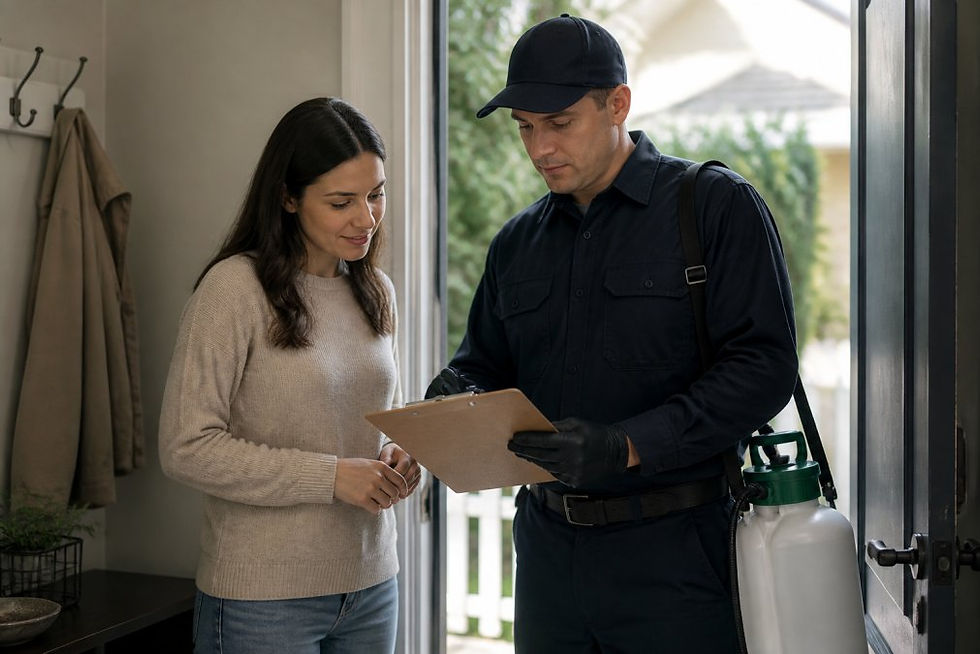
A common mistake is scheduling pest control during service hours. A technician in full branded uniform walking through a dining room creates exactly the impression that ends up in a Google review. Schedule treatments during off-hours, use service entrances, and work with a provider who understands that your reputation is part of what they protect.
Discreet service protocols should include:
Unmarked vehicles or vehicles parked away from the main entrance
Off-hours scheduling (early morning before opening, after closing, or on dark days)
Service entrance access to avoid customer-facing areas
Discrete equipment transport in cases rather than open spray equipment
Staff briefing so kitchen teams understand the visit and do not mention it to customers
Dobelo Extermination's certified team operates with these protocols as standard practice for food service clients.
Pro Tip Schedule pest control visits on your lowest-traffic day of the week, immediately after closing. This gives treatments maximum dwell time before the next service period and ensures no customer-facing staff are present.
Restaurant Pest Prevention Tips That Actually Hold Up
Reactive pest control is more expensive than prevention. Prevention strategies that consistently reduce pest pressure in commercial food service environments include:
Seasonal Pest Prevention Calendar for Ottawa Restaurants
Ottawa's climate creates predictable seasonal pest patterns. Planning prevention activities around these patterns is more effective than responding after problems appear.
Season | Primary Pest Risks | Prevention Priority |
Spring (March-May) | Ants, rodents seeking entry, fruit flies | Seal exterior gaps, inspect perimeter, clean floor drains |
Summer (June-August) | Flies, wasps, cockroach activity peaks | Fly control systems, waste management, screen maintenance |
Fall (September-November) | Rodent ingress, cockroach harborage | Rodent exclusion, structural sealing, deep equipment cleaning |
Winter (December-February) | Rodents, cockroaches in heated areas | Bait station monitoring, interior inspections, storage audits |
Fall is the highest-risk period for Ottawa restaurants. As outdoor temperatures drop, rodents actively seek warm environments with food access. Inspect every potential entry point and ensure rodent exclusion measures are current.
Commercial Kitchen Sanitation and Structural Sealing
Commercial kitchen sanitation is the foundation of pest prevention. Pest monitoring and treatment programs work significantly better in clean, well-maintained kitchens because they eliminate harborage conditions that allow pest populations to establish.
Areas most commonly overlooked:
Floor drains: Organic buildup is a breeding site for drain flies and an attractant for cockroaches. Clean and treat drains weekly.
Behind and under cooking equipment: Grease accumulation is a primary cockroach harborage. Pull equipment quarterly for deep cleaning.
Wall-floor junctions: Gaps where wall cladding meets the floor are entry points and harborage zones. Seal with food-safe caulk.
Utility penetrations: Every pipe, conduit, and cable passing through an exterior wall is a potential rodent entry point. Seal with steel wool and caulk or purpose-made exclusion materials.
Receiving areas: Incoming deliveries are a common introduction point for cockroaches and rodents. Inspect deliveries before bringing them into the kitchen.
Structural sealing is a one-time investment that pays ongoing dividends. A certified pest control technician can identify specific gaps representing the highest risk.
Watch Out Never use expanding foam alone to seal rodent entry points. Rodents can chew through standard foam within hours. Use steel wool packed tightly into the gap, then cover with caulk or a metal plate.
Emergency Pest Removal and Customized Programs for Ottawa Food Services
Some pest situations cannot wait for scheduled appointments. A live rodent sighted during service, an active cockroach infestation discovered before a health inspection, or a fly problem that escalates overnight all require immediate response. Emergency pest removal for food service operations requires a provider who can respond quickly, work within operational constraints, and deploy food-safe treatments.
Dobelo Extermination's 24/7 availability means certified technicians can respond at any hour to urgent pest situations.
Customized pest control programs are built around your specific operation: layout, pest history, inspection schedule, and seasonal risk profile. They include defined service frequencies, documented pest activity logs, and clear escalation protocols for emergencies.
The most effective programs combine:
Scheduled preventative maintenance visits timed to seasonal risk peaks
Ongoing bait station and trapping program monitoring
Sanitary audit support to prepare for Ottawa Public Health inspections
Emergency response capacity for situations that cannot wait
For food service businesses in Ottawa, working with a provider who understands both pest management and regulatory compliance is essential. According to Canadian Food Inspection Agency food safety guidelines for food businesses, pest control is a core component of a food safety management system, and documentation of pest control activities is expected as part of any serious food safety program.
Key Takeaway A customized pest control program for your Ottawa restaurant should include documented service records, seasonal adjustments, and a clear emergency response protocol. These three elements separate a compliant program from a basic spray service.
A restaurant that can present organized pest activity logs and treatment records to an Ottawa Public Health inspector demonstrates operational competence. That matters both for compliance and for the confidence it gives your own team.
Pest infestations are one of the fastest ways a well-run restaurant can lose standing with health authorities and customers. Dobelo Extermination's certified team provides 24/7 emergency response, customized pest control programs, and discreet service protocols designed specifically for Ottawa food service operations. With guaranteed results and a commitment to food-safe, compliant treatments, Dobelo Extermination gives restaurant operators the documentation, prevention, and rapid response capacity they need to stay inspection-ready year-round. Contact Dobelo Extermination for a free estimate and a program built around your operation.
Frequently Asked Questions
What are the Ottawa Public Health requirements for restaurant pest control?
Ottawa Public Health enforces the Ontario Food Premises Regulation (O. Reg. 493/17) under the Health Protection and Promotion Act. Restaurants must maintain a pest-free environment, keep pest activity logs, and demonstrate active prevention measures during inspections. Inspectors check for evidence of rodents, cockroaches, and flies, as well as the sanitation protocols in place. Facilities that fail these checks can receive closure orders. A certified commercial exterminator who provides written service records and documentation is essential for passing these audits.
How can restaurants in Ottawa maintain pest control discreetly?
Discreet restaurant pest control in Ottawa means scheduling treatments during off-hours, such as after closing or before morning prep begins. Certified technicians arrive in unmarked vehicles and use food-grade treatments that leave no visible residue or strong odors. Bait stations and trapping programs are installed in concealed locations like under equipment and inside wall voids. A professional provider will coordinate directly with kitchen management so front-of-house staff and customers are never aware of any pest activity or treatment taking place.
What are the most common pests in Ottawa restaurants?
Ottawa restaurants most commonly deal with German cockroaches, house mice, Norway rats, and drain flies. German cockroaches thrive in warm, humid kitchen environments near dishwashers and under refrigeration units. Rodents enter through structural gaps as small as 6 mm and are especially active during Ottawa's colder months. Drain flies breed in organic buildup inside floor drains. Each pest requires a different treatment approach, which is why accurate pest identification at the start of any integrated pest management program is critical for food service facilities.
How often should a restaurant in Ottawa have professional pest inspections?
Most Ottawa food service operations benefit from monthly professional pest monitoring visits, though high-volume restaurants or facilities near green spaces may need bi-weekly inspections. Regular visits allow technicians to update pest activity logs, refresh bait stations, and catch early signs of infestation before they escalate. Ottawa Public Health inspectors view consistent, documented pest monitoring as a strong indicator of responsible food safety management. Your certified exterminator should provide a written service report after every visit to support compliance during sanitary audits.
Are there eco-friendly pest control options for Ottawa food services?
Yes. Integrated pest management for food services prioritizes non-toxic solutions wherever possible, including mechanical trapping programs, rodent exclusion through structural sealing, pheromone monitoring traps, and targeted application of food-grade treatments only where pest activity is confirmed. Chemical interventions are used as a last resort and only with products approved for use in food premises under Health Canada's Pest Control Products Act. This approach reduces chemical exposure for kitchen staff while still meeting Ottawa Public Health regulatory requirements.
What does a 100% satisfaction guarantee mean for restaurant pest control?
A satisfaction guarantee from a certified exterminator means that if pest activity returns within the agreed warranty period after treatment, the provider returns to re-treat at no additional cost. For restaurants, this is especially important because a single unresolved infestation can trigger a failed health inspection or force a temporary closure. Before signing any service agreement, confirm in writing what the guarantee covers, how long it lasts, and what conditions apply, such as maintaining the sanitation protocols recommended by your pest management provider.
Estimation gratuite
This article was written using GrandRanker


Commentaires