
Discreet Residential Extermination: A Step-by-Step Guide
- Ahkim Camara
- 14 août
- 8 min de lecture

Table of Contents
What Discreet Residential Extermination Means
How to Prepare Your Home for Pest Treatment Before the Technician Arrives What to Expect During Treatment
Before the Technician Arrives
What to Expect During Treatment
Types of Pests and Treatment Methods
Why Unmarked Pest Control Vehicles Protect Your Privacy
Understanding the Cost of Residential Extermination Services
What to Look for in a Certified Exterminator
After Treatment: Preventing Future Infestations
Conclusion
Last Updated: August 15, 2026
What Discreet Residential Extermination Means
Discreet residential extermination prioritizes confidentiality and privacy while delivering effective pest control treatment. Unlike standard services that arrive in visibly branded vehicles, discreet extermination uses unmarked transportation, minimal disruption, and professional discretion throughout the process.
Many homeowners worry that neighbours, tenants, or business associates will notice pest treatment and draw conclusions about property maintenance. This concern is particularly acute in multi-unit buildings and rental properties where reputation matters. Discreet residential extermination addresses this by keeping pest control services private.
At Dobelo Extermination, we understand that infestation is a common problem affecting properties of all types, it doesn't reflect poor housekeeping. The process involves unmarked vehicles, trained technicians who understand discretion, flexible scheduling that minimizes visibility, and professional communication that respects your privacy. A certified exterminator arrives at a convenient time, uses equipment that requires no obvious external signage, and completes work with minimal evidence of their presence.
Pro Tip Request service during off-peak hours, early morning or late evening, to further reduce visibility in multi-unit buildings or neighbourhoods with high foot traffic.
How to Prepare Your Home for Pest Treatment
Before the Technician Arrives
Preparation ensures effective treatment and efficient work. Document the areas most affected by infestation, noting entry points, nesting areas, and signs of pest activity. This information helps the technician target treatment precisely.
Clear clutter from affected areas, basements, attics, kitchens, and bedrooms. Pests use clutter as hiding spots and breeding grounds. Remove cardboard boxes, old newspapers, and fabric scraps. This also allows the technician to access wall cavities and floor joints.
Secure or relocate food items, dishes, and cooking utensils. Store dry goods in sealed containers and remove pet food and water bowls. Cover aquariums or terrariums and turn off air pumps during treatment, as some products can harm aquatic life.

Seal obvious cracks and gaps around baseboards, door frames, window sills, and utility penetrations using caulk, weatherstripping, or expanding foam. This prevents pests from escaping treatment zones and re-entering from adjacent areas.
Vacuum thoroughly, especially in corners, under furniture, and along baseboards. Empty the vacuum immediately into a sealed bag and dispose of it outside. If bed bugs are suspected, wash bedding in hot water and dry on high heat, then store clean bedding in sealed plastic bags until after treatment.
Watch Out Do not apply your own pesticides before the technician arrives. Multiple treatments can create unpredictable chemical reactions and reduce the effectiveness of professional-grade solutions.
What to Expect During Treatment
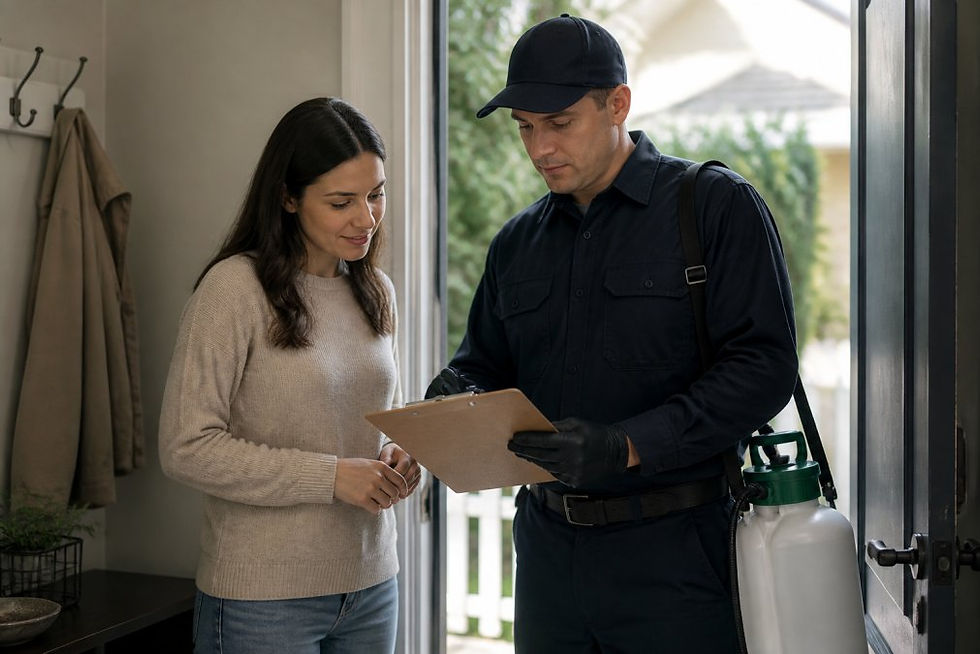
The technician will conduct a thorough inspection, typically taking 30 to 60 minutes depending on home size and infestation extent. They'll explain findings, discuss treatment options, and answer questions.
Treatment methods vary by pest type and severity. Common approaches include targeted spraying, dust application in wall cavities, baiting systems, and heat treatment for bed bugs. Most treatments require you to vacate for two to four hours. The technician will provide clear instructions on when it's safe to return and which areas remain off-limits temporarily.
Avoid touching treated surfaces or bait stations. Keep children and pets away from treatment zones until the technician confirms it's safe. If you have respiratory sensitivities, discuss alternative products or methods before treatment begins.
Types of Pests and Treatment Methods
Bed bugs are addressed through targeted spraying of mattresses and furniture combined with heat treatment in severe cases. Multiple treatments spaced 7 to 14 days apart are often necessary because bed bug eggs require time to hatch.
Cockroaches respond well to gel baiting systems placed in kitchens and bathrooms. Baits work over several days as roaches consume poison and spread it throughout colonies. Dust treatments in wall cavities complement baiting for complete control.
Rodents require snap traps, electronic traps, and poison bait stations placed along walls where activity is evident. Exclusion work, sealing entry points and removing food sources, is critical for preventing re-infestation.
Carpenter ants indicate structural wood damage and require targeted treatment of affected wood and colony sites. Addressing moisture problems that attract carpenter ants is equally important for long-term control.
Termites demand professional treatment due to serious structural damage risk. Subterranean termites are treated through soil barriers and baiting systems. Drywood termites may require localized treatments or fumigation depending on severity.
Wasps and hornets are removed by treating nests directly or applying residual sprays. Treatment timing is critical, early morning or dusk when insects are less active is safest.
Key Takeaway The most effective treatment combines immediate pest elimination with prevention measures addressing entry points and environmental factors that attract pests. One-time treatment rarely provides lasting results without follow-up and exclusion work.
Why Unmarked Pest Control Vehicles Protect Your Privacy
Unmarked vehicles are essential to discreet residential extermination. A clearly branded pest control van signals to neighbours that pest control is occurring at your address, potentially triggering gossip or assumptions about property maintenance.

Unmarked vehicles look like standard commercial vans in neutral colours without exterior signage. Technicians arrive in ordinary work clothing rather than branded uniforms. This maintains privacy while allowing service to proceed normally. Neighbours cannot identify the vehicle's purpose by looking at it.
This matters significantly in rental buildings where discretion prevents unnecessary alarm among other residents. In owner-occupied neighbourhoods, unmarked service protects your property's perceived value. For commercial properties, restaurants, and retail spaces, discretion is critical, customers should never see obvious pest control activity. Many food service establishments schedule extermination during closed hours to maintain confidentiality.
The technician's professional demeanour reinforces discretion. They arrive prepared, complete work efficiently, and leave minimal evidence of their presence.
Understanding the Cost of Residential Extermination Services
Pricing varies based on pest type, infestation extent, home size, treatment methods required, and whether follow-up visits are necessary. Most certified exterminators offer free consultations and written estimates before beginning work.
Some services charge per visit, while others offer package pricing for multiple treatments. Follow-up visits are often included in the initial quote because most infestations require at least two treatments spaced one to two weeks apart.
When evaluating pricing, consider the exterminator's certification, experience, and warranty. Certified professionals may charge more than unlicensed operators, but certification indicates proper training and adherence to industry standards. A guarantee covering re-treatment if infestation returns within a specified period adds value.
Dobelo Extermination provides transparent pricing through free consultation and written estimate tailored to your specific situation.
Best For Homeowners seeking guaranteed results should prioritize certified exterminators over budget alternatives. The cost difference is typically modest, but reliability and warranty coverage justify the investment.
What to Look for in a Certified Exterminator
Certification is the first qualification to verify. In Canada, pest management professionals must comply with provincial regulations. Health Canada's Pest Management Regulatory Agency establishes national standards for pesticide products and safe use.
Ask about training and experience. A technician with five or more years in pest management has encountered diverse scenarios and understands how to adapt treatment approaches. Verify that the company carries liability insurance and request proof of coverage before signing any agreement.
Check references and online reviews from previous customers. Look for patterns: Do customers mention discretion and professionalism? Are follow-up treatments effective? Consistent positive reviews indicate a reliable provider.
The company should offer a clear warranty or guarantee, typically covering re-treatment if infestation returns within 30 to 60 days. This demonstrates confidence in their methods and provides recourse if initial service doesn't resolve the problem.
Communication and transparency matter. A good exterminator explains what they're doing, why, and what to expect. They answer questions without rushing and provide written documentation of treatment methods, products used, and safety precautions.
Professional Pest Management Association of Canada offers resources for finding certified professionals and understanding industry standards.
After Treatment: Preventing Future Infestations
Once treatment is complete, prevention becomes your priority. Seal all entry points, cracks, gaps around pipes, and spaces around windows and doors. Rodents can squeeze through openings as small as a dime.
Remove conditions that attract pests. Eliminate standing water, fix leaky pipes, and ensure proper drainage. Many pests require moisture to survive. Reduce humidity in basements through ventilation or dehumidifiers. Store firewood at least 6 meters from your home and off the ground.
Maintain cleanliness in kitchens and dining areas. Clean up food debris immediately, store food in sealed containers, and take garbage out regularly. Don't leave pet food out overnight. Vacuum regularly and wash bedding weekly in hot water.
Schedule regular inspections if you've had a significant infestation. Many certified exterminators offer quarterly or semi-annual monitoring visits to catch new pest activity before it becomes a full infestation.
Document any pest activity you notice after treatment. Keep records of dates, locations, and pest types observed. Report concerns to your service provider immediately rather than waiting for a scheduled follow-up visit.
Work with your exterminator to develop a long-term pest management plan addressing immediate treatment, follow-up visits, preventive measures, and ongoing monitoring.
Watch Out Ignoring early signs of new pest activity after treatment increases re-infestation risk. Pests reproduce rapidly, a single female can establish a new colony within weeks. Contact your exterminator at the first sign of activity.
Pest infestations disrupt your sense of security and comfort in your own home. Discreet residential extermination ensures you can address this problem without public visibility or neighbourhood attention. Dobelo Extermination's certified technicians arrive in unmarked vehicles, complete treatment with professional discretion, and provide guaranteed results backed by follow-up care. Request a free consultation and written estimate to understand the specific cost and timeline for your situation. Our 24/7 availability means you can get help when you need it most, restoring your peace of mind and protecting your home from future infestations.
Frequently Asked Questions
How can I ensure my pest control service remains confidential?
Discreet residential extermination uses unmarked vehicles with no visible company branding, ensuring neighbors cannot identify pest control activity. Certified technicians arrive in plain clothing, conduct inspections and treatment with minimal disruption, and schedule appointments at your preferred time. Request confidentiality when booking, and confirm the service provider uses unmarked vehicles and professional discretion protocols. This approach protects your privacy while addressing infestations effectively.
What should I look for when hiring a professional exterminator?
Choose a certified exterminator with verifiable credentials, liability insurance, and proven experience treating your specific pest type. Ask for references or case studies from previous residential clients. Confirm they offer 24/7 availability for urgent situations, provide transparent pricing, and guarantee results. Professional exterminators conduct thorough inspections before treatment, explain their methods clearly, and follow safety protocols. Verify they use approved products and comply with health and safety regulations in your region.
When is the right time to call a professional for a pest infestation?
Contact a certified exterminator as soon as you suspect an infestation. Early intervention prevents pests from spreading and multiplying, reducing treatment complexity and cost. Signs include visible droppings, unusual odors, damage to wood or fabric, or live pest sightings. Do not delay hoping the problem resolves on its own. Professional extermination works faster and more effectively than over-the-counter products. Many services offer rapid response, including 24/7 emergency availability for urgent situations.
Does professional pest control work in small spaces like apartments?
Yes, discreet residential extermination is highly effective in apartments and small homes. Certified technicians adjust treatment methods based on space size and layout. Small spaces often require less product and shorter treatment times, though effectiveness remains the same. Inform your exterminator of your apartment's size and any shared walls with neighbors so they can plan discreet intervention. Many professionals specialize in multi-unit residential buildings and understand the privacy concerns of apartment dwellers.
Estimation gratuite
This article was written using GrandRanker


Commentaires